National Security
Iran confirms it runs smuggling routes and threatens Britain
25 July 2026 · United Kingdom
Migrants are helped to cross the Channel by Iran in return for favours when they settle in the UK, an English Vanguard investigation has found. Iranian officials admit their armed forces influence trafficking routes and say London could be made unsafe without missiles.
Share this story
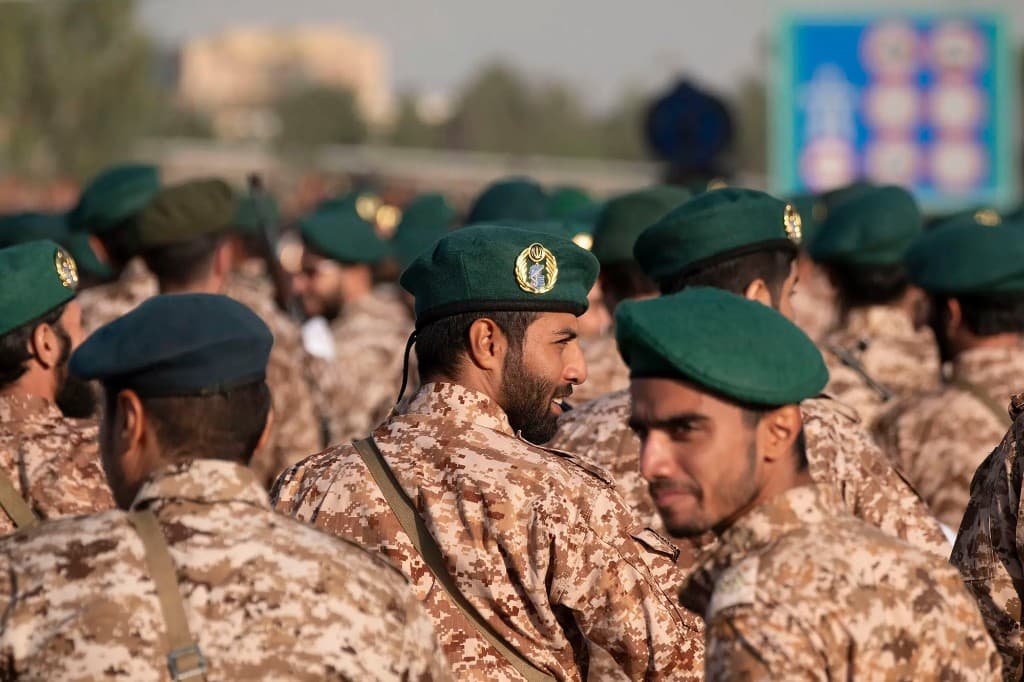
Iranian officials have confirmed that their armed forces influence people-smuggling routes into Britain and have threatened to make London unsafe, an English Vanguard investigation has found.
Suspected covert operatives linked to Iran have been intercepted by UK authorities while attempting to enter Britain on small boats across the English Channel. Migrants are helped to cross the Channel by Iran in return for favours when they settle in the UK.
Individuals with links to Tehran's intelligence agencies are understood to have been stopped during attempts to reach the UK through irregular crossings, according to security sources and interviews conducted for this report.
Smuggling routes and Iranian links
People smugglers working on the Continent told English Vanguard that the Iranian regime had facilitated passage to Britain for migrants living at Calais in exchange for a favour for Iran after they settled in England.
Home Office officials have thwarted Iranian-linked individuals arriving from small boats by using drones and surveillance watchtowers fitted with artificial intelligence to monitor vessels crossing the Channel.
Smuggling networks run by Iran are responsible for transporting people with links to the Iranian regime across Europe and into Britain, according to Tehran officials interviewed for this investigation.
Some human trafficking routes between the Middle East and the Channel are owned by the Islamic Revolutionary Guard Corps (IRGC), those sources said.
Key smuggling routes
English Vanguard has mapped the principal routes used to move people from Iran towards Britain. The table below sets out the stages described by smugglers and Iranian-linked sources interviewed for this investigation.
| Stage | Route | Details |
|---|---|---|
| 1 | Iran to Turkey | Two key routes are available to migrants crossing into Turkey. One involves sneaking across near a border checkpoint, while the other takes them up through the mountains and via Mako in north-western Iran. |
| 2 | Turkey | Once inside Turkey, migrants are handed to smugglers in the city of Van, who take them across the country to Istanbul via Diyarbakir and Samsun. |
| 3 | Turkey to Italy | Migrants are loaded onto boats near Istanbul before embarking on a sea voyage across the Aegean Sea and arriving in Reggio Calabria, Italy. |
| 4 | Europe and Britain | Once in southern Italy, the migrants are taken on trains up to Milan. From there, they go west into France. |
| 5 | Calais to Dover | Iranian people smugglers transport agents to Dover, where they cross the Channel in dinghies. |
Alternative routes
Sources also described shorter or parallel routes that bypass parts of the main overland path.
| Route | Details |
|---|---|
| Istanbul to Calais | Smugglers linked to Iran take people across Europe, walking through forests. |
| Eastern Europe to London | Iranian proxies establish mafia-like groups in Eastern European countries. From there, operatives fly to London, commit the crime and fly out. |
Unit 700 and intelligence links
Suspected Iranian operatives intercepted on small boats are thought to have links to the Ministry of Intelligence and Security, Iran's primary intelligence agency responsible for overseas operations.
"Revolutionary people" have been positioned in London through smuggling networks understood to be operated by the IRGC's Unit 700.
Unit 700 is the logistics branch of the Quds Force, the IRGC's covert foreign operations division. The Quds Force has been linked by Western governments and analysts to supplying weapons and funding to groups including Hamas, Hezbollah, and the Houthis.
An Iranian official said: "Of course, don't forget that our armed forces have influence and run the [smuggling] routes in some cases if they want."
The official added that Iran had people in London who could be activated, and said smuggling routes were "more important and useful than the missiles for us", adding: "We do not need a missile to target London, it's easier than that."
Scale of the threat
On Thursday, a dinghy carrying 165 migrants crossed the Channel, setting a record for the number of arrivals on a single small boat.
The number of threats arriving via small boats is dwarfed by the volume of IRGC-affiliated people entering Britain on legal flights from Europe, officials said.
Officials also said the radicalisation and activation of the Iranian diaspora in London, and the use of proxies in Britain, posed a bigger national security risk than small boats, which are often an expensive and unreliable route.
In October, MI5 director-general Ken McCallum warned that his agency had tracked "more than 20 potentially lethal Iran-backed plots" over the previous 12 months. He also warned that Iran was making "extensive use of criminals", including drug traffickers, as proxies to carry out missions in the UK.
Smugglers' accounts
Two Iranian smugglers interviewed for this investigation said they were aware that some of their routes were run by the Iranian government.
One said: "We do not know the extent, but some of the money definitely goes to them. It's the casual and normal route people take but run in the background by the Iranian government."
A second smuggler said the routes involved drugs, adding: "For Britain, you hang out in a park in Calais or Dunkirk, then someone who may work for Iran but does not know about it approaches you, then you are in a boat to London in less than a week."
The smuggler added that most people were fleeing poverty and would do whatever favour they were asked for when they arrived in the UK in exchange for a cheaper journey.
Recent cases and political response
Last month, a man with dual British-Iranian nationality was charged with setting fire to a memorial wall commemorating anti-regime protesters killed in Iran. Counter-terror police investigated the April blaze.
Alicia Kearns, the shadow security minister, said: "The Government needs to face facts: the IRGC is exploiting the small boats crisis to put its operatives on British streets."
She called for an urgent taskforce to root out Iranian agents among those arriving and who have already arrived, designation of the Ministry of Intelligence and Security under hostile state legislation, and emergency powers to shut down IRGC cut-outs such as the Islamic Centre of England.
She added: "Tehran is openly threatening Britain and we have a Prime Minister silent on our national security. Our people deserve answers, action and leadership."
Expert view
Dr Kristian Gustafson, deputy head of Brunel University's Centre for Intelligence and Security Studies and a former Sandhurst lecturer, said Iran was more likely to use local criminals to do its bidding than to bring in its own operatives.
He said: "Were they to do this, they would probably use, as they have so far, locally recruited individuals. So you play on anti-Israeli, anti-Zionist sentiment to recruit young local men who have a bee in their bonnet over the Gaza war and ongoing actions of Israel and the United States in the Middle East."
Home Office response
A Home Office spokesman said: "Our first priority is national security. There are stringent security checks for small boat arrivals. Those identified as a threat will be detained immediately and we will do everything in our power to remove them at the earliest opportunity."
The spokesman added: "On top of these robust processes, we have fast-tracked a change in the law to outlaw support for the IRGC, equipping the police and intelligence service with more powers to disrupt those working on their behalf, and making it easier to prosecute them."
Editorial note
This report draws on interviews with smugglers and Iranian officials, security sources, and on-record statements from public officials and experts.
English Vanguard has not named individuals intercepted at the border or published operational details that could compromise live security work.
Where this report refers to links between crossing networks and the Iranian state, those connections rest on the accounts of sources interviewed for this investigation and on public statements unless and until they are confirmed through official prosecution or public inquiry.
If you have relevant information, contact our newsroom at newsroom@englishvanguard.co.uk or use our secure tip channels.